
ENGAGEMENT WITH SECURITY FORCESKNOWLEDGE HUB
Explore resources and good practices for engaging security forces on integration of human rights in their work
About the Engagement with Security Forces Knowledge Hub
Human rights provide the foundation for lawful, professional and effective security institutions.
The Engagement with Security Forces Hub (ESF Hub) serves as a gateway to the UN Human Rights Office's global engagement with security forces work and provides a central access point to human rights standards, guidance and tools relevant to security sector actors.
The overarching objective of the UN Human Rights Office's engagement with security forces is to promote professional, effective and accountable security institutions that possess the knowledge, legal and regulatory frameworks, leadership, institutional culture, oversight, accountability and remedy mechanisms necessary to ensure compliance with international human rights law and standards and, where applicable, international humanitarian law. This objective applies to security forces operating domestically as well as those deployed in international operations across the peace and conflict continuum.
The UN Human Rights Office advances this objective through comprehensive, context-specific and preventative approaches that combine human rights monitoring and reporting, advocacy and dialogue with Governments and security actors, and high-quality technical assistance and capacity development. These efforts are informed by sustained engagement with relevant stakeholders and counterparts at the national, regional and international levels.
Furthermore, the Office engages with a wide range of security actors, including armed forces, military and paramilitary forces, police services, gendarmeries, intelligence services, border management and control agencies, correctional services, wildlife rangers and other security institutions. It also engages with civilian, military and paramilitary authorities responsible for the management, administration, command, control or oversight of such forces; personnel serving in United Nations peace operations and in peace operations mandated, authorized or conducted by regional and subregional organizations or ad hoc coalitions; private security companies; non-State armed groups; and de facto authorities exercising control over security forces.
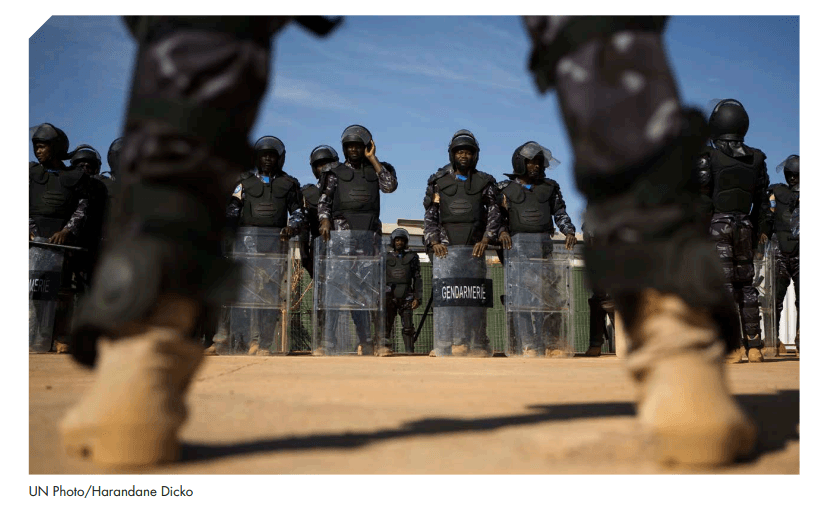
Technical Cooperation
Through technical cooperation, OHCHR provides advisory support to help States translate human rights obligations into laws, policies, institutional practices and operational guidance.
Legal & Policy Frameworks
Advisory support on developing and reviewing laws, policies and institutional frameworks governing security forces, in line with international human rights standards.
Capacity-Building & Good Practices
Support to strengthen institutional and personnel capacity of security forces, including through integration of human rights standards into technical training areas, professional standards and accountability practices.
Human Rights in Security Operations
Practical guidance on integrating human rights into planning, conduct and oversight of security operations.
State responsibility
The State remains responsible for ensuring that its security forces comply with its human rights obligations. OHCHR's role is to provide technical and advisory assistance that helps States meet those obligations in practice.
Thematic areas
Four workstreams structure the Hub: facilitating peaceful assemblies, the use of force, investigations, and training of law enforcement officials.
Peaceful Protests
Facilitating and protecting the right to peaceful assembly while safeguarding the rights, safety and security of everyone affected, including law enforcement officials.
Use of Force
Ensuring that any use of force by law enforcement is lawful, necessary, proportionate and accountable, in line with international human rights standards.
Investigations
Conducting human rights-compliant, prompt and effective investigations to ensure accountability, protect victims' rights, and uphold the rule of law.
Training
Integrating human rights principles and standards into technical training and operational practice to strengthen professional law enforcement capacity.
Tools and Resources
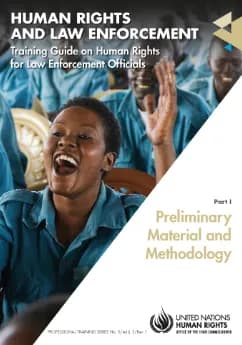
The Training Guide on Human Rights for Law Enforcement Officials
The Training Guide on Human Rights for Law Enforcement Officials forms part of the revised “Human Rights and Law Enforcement Guidance and Training Package”. Following the success of the previous edition, which was widely distributed and translated into various official United Nations languages and local languages, the Office of the United Nations High Commissioner for Human Rights (OHCHR) has revised and restructured the Training Guide to deliver updated support for law enforcement trainers. The Training Guide provides methodology and guidance for trainers developing training activities aimed at law enforcement officials. Chapters are available separately and correspond with those of the Manual on Human Rights for Law Enforcement Officials. The Training Guide includes advice and support for trainers in designing training courses and provides examples of training objectives, sample session plans, questions and exercises with indicative answers.
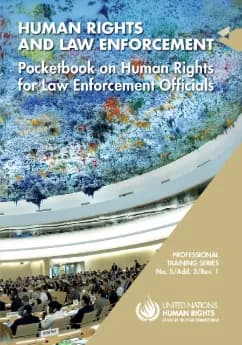
The Pocketbook on Human Rights for Law Enforcement Officials
The Pocketbook on Human Rights for Law Enforcement Officials forms part of the revised “Human Rights and Law Enforcement Guidance and Training Package”. Following the success of the previous edition, which was widely distributed and translated into various official United Nations languages and local languages, the Office of the United Nations High Commissioner for Human Rights (OHCHR) has revised and restructured the Pocketbook to make it a more readily accessible and user-friendly reference tool for law enforcement officials. While the Pocketbook provides an overview of international human rights standards for law enforcement, it can also be tailored to a particular law enforcement agency’s local context. The international standards can, for example, be complemented with references to national laws, internal policies or standard operating procedures. The Pocketbook includes hundreds of point-form standards and recommendations, organized according to law enforcement duties, functions and topics.
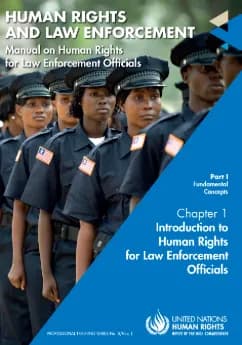
The Manual on Human Rights for Law Enforcement Officials
The Manual on Human Rights for Law Enforcement Officials forms part of the revised “Human Rights and Law Enforcement Guidance and Training Package”. Following the success of the previous edition, which was widely distributed and translated into various official United Nations languages and local languages, the Office of the United Nations High Commissioner for Human Rights (OHCHR) has revised and restructured the Manual to provide updated guidance on how to operationalize human rights norms and standards in law enforcement. The revised Manual provides practical guidance for law enforcement officials at all levels, trainers, advisers, policymaking officials and government authorities involved in ensuring effective and human rights-compliant institutions with staff who have the skills, knowledge and attitudes to respect, protect and fulfil human rights. The Manual comprehensively sets out important human rights norms and standards for law enforcement officials and explains how these officials can apply these standards for the professional and effective performance of their functions. It also outlines recommendations for senior officers and law enforcement institutions to put in place an institutional structure that allows law enforcement officials to effectively apply the standards and good practices in the Manual.

The Model Protocol for Law Enforcement Officials to Promote and Protect Human Rights in the Context of Peaceful Protests
The Model Protocol for Law Enforcement Officials to Promote and Protect Human Rights in the Context of Peaceful Protests is developed by the United Nations Special Rapporteur on the rights to freedom of peaceful assembly and of association in collaboration with the United Nations Office on Drugs and Crime and the Office of the United Nations High Commissioner for Human Rights, pursuant to Human Rights Council resolution 50/21. The aim of the Model Protocol which is based on international human rights laws, standards and good practices, is to enhance the capacity and practices of law enforcement agencies to fulfil their duty to promote and protect human rights in the context of peaceful protests
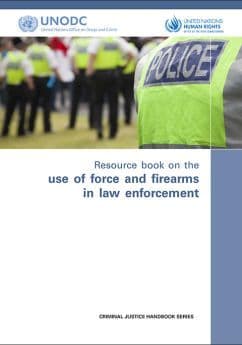
The Resource book on the use of force and firearms in law enforcement
The resource book explores international law sources relevant to the use of force and the general responsibility of law enforcement authorities for the use of force. It discusses a number of instruments of force, including firearms, and the conditions under which these should be used. It further examines the possible use of force in a number of specific policing situations. Finally, it also outlines good practices for accountability in the use of force and firearms by law enforcement officials. The publication aims to support States in their efforts to develop and implement more effective, accountable and human rights-based law enforcement policies. It is intended for policy and law-makers in particular, including those involved in the drafting of policies, regulations, Standard Operating Procedures and training materials on the use of force and firearms, as well as for stakeholders exercising control and oversight functions over law enforcement agencies.
Events Calendar
Stay informed on upcoming events covering engagements with Security Forces